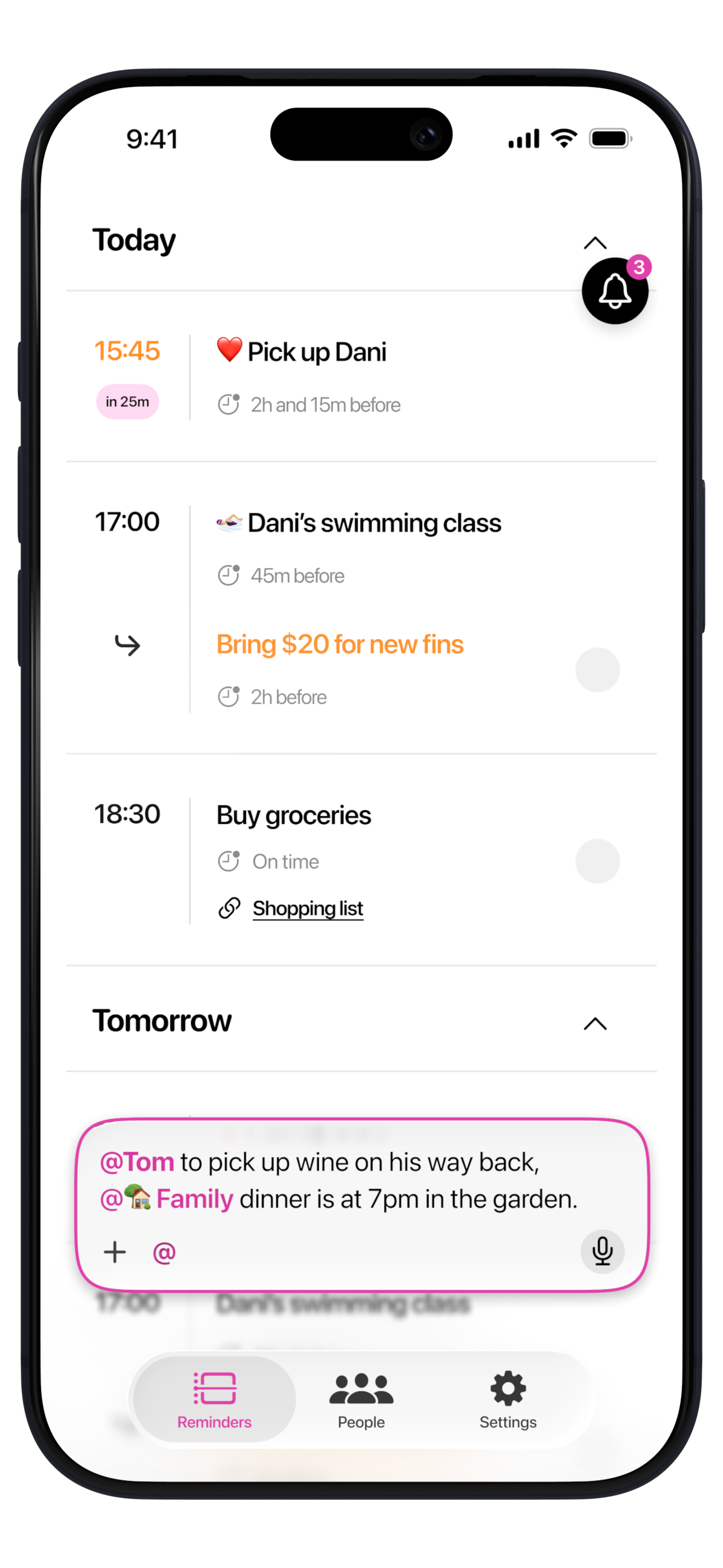
In most couples, one partner quietly tracks every appointment, refill, and birthday. Moving that onto a shared surface, rather than asking harder, is the lever that actually helps.
You probably already know which one of you it is. The partner who remembers the car is due for service, that your niece's birthday is Thursday, that you're nearly out of the good coffee. That invisible tracking has a name, cognitive labor, and in most different-sex couples one partner carries far more of it.
The sharp part is the one couples feel but rarely name: partners genuinely share the decisions. What falls unequally is the anticipating and the monitoring - the bookends nobody sees. One person enjoys weighing the choice; the other person did the silent prep work to surface the choice in the first place, and stays on the hook to check it got done.
It's not that we don't decide together. It's that I'm the one who has to remember there's a decision to make.
Why this quietly erodes a relationship
This imbalance is a frequent source of conflict for couples. That tracks with what couples report: the fights are rarely about the dishes themselves and almost always about who had to remember the dishes, the bills, the school form. And it's the cognitive load specifically - the noticing, not the doing - that predicts stress and burnout.
There's a deeper twist that explains why "but I do plenty around the house" never settles the argument. What predicts whether a couple feels good about the split isn't only how much each person does - it's whether the split feels fair. Invisible work is, almost by definition, work that doesn't feel fairly seen. Make it visible and you give fairness something to stand on.
And no, earning more doesn't fix it: the mental load barely budges with money or a career. You can outsource the cleaning. You can't outsource the noticing - unless you make the noticing something you both can see.
Redistribute, don't delegate
Here's the trap most couples fall into. The over-loaded partner tries to "delegate" ("can you remember to call the plumber?"), but delegating just adds a new monitoring task: did they actually do it? The mental load doesn't move; it grows. The fix isn't a longer list of asks. It's redistribution: putting the anticipation and monitoring onto a surface you both own, so a reminder is simply there, ready for either of you to pick up.
Moving the noticing onto a surface you both own is precisely what RemindMe does. The moment something surfaces, describe it once however it lands, whether typed, spoken in any language, or snapped as a photo of a flyer or screenshot, and an AI planner understands what you actually mean, works out when it can realistically be done, and fills in the details you left out. Hand it to your partner from your contacts and the same intention pings their phone at the right moment, and joins their day's agenda on the Lock Screen. No group chat to scroll, no forwarding, no "did you see my text." Contact matching happens on your device, and your reminders are never used to train AI.
Externalizing intentions like this is one of the best-evidenced moves in memory science: a reminder lifts follow-through far above memory alone. The reminder doesn't just nag - it cues you both at the right moment.
Three small habits that rebalance the load
- Say it once, out loud. The second it occurs to you ("we're low on the kids' allergy meds"), capture it instead of carrying it. The point of offloading is to stop holding it in your head.
- Share it, don't assign it. A reminder you both see beats a task one of you has to chase. Whoever's closer to the moment acts on it.
- Cue the when, not just the what. "Renew the parking permit Friday" lands at the moment it matters, not as a vague worry that follows you to bed.
For the parts of life you run together - the standing date night, the shared shopping list, the kids' schedule - a group like "Us" or "Family" lets you both see and add reminders without anyone playing secretary. The goal isn't perfect 50/50 accounting. It's a home where the anticipating and the monitoring no longer live silently in one person's head, and where the work finally feels as shared as it should be.
Why not just use Apple Reminders or a shared calendar?
Apple Reminders and a shared calendar are both useful, and both are static: they show what you put in, fire at the time you set, and then the work of reacting is back on you. A calendar throws one fixed-time ping for the car service - if you don't get to it, nothing reschedules it, nothing keeps it alive as it slips toward urgent, and nothing weighs how urgent it's becoming and moves it to a more sensible moment. A shared list just holds "call the plumber" in a column you each have to remember to open. Neither one lets you put a reminder on your partner's phone as their own at the moment they can - so the follow-up lands on the organized partner, and "did you call the plumber yet?" slides into nagging.
RemindMe works the other way round - there's an AI thinking about your reminders behind the scenes. It works out a sensible time to remind you when you leave one out, and uses the exact time you give when you give one, reschedules an open task to a moment you could actually act on it, and gives it a gentle push as it gets urgent instead of pinging once and going quiet. The chasing comes from the app, not from you - so neither of you has to be the nag. And instead of filing a task into a shared column and hoping it's seen, you hand a specific reminder to a specific person, and it arrives on their phone as their own notification, at the time it matters. For the partner who'd never adopt a new app, that's the whole point: they install it once, and the reminders you send simply arrive - nothing to organize, no habit to keep up. And there's a knock-on effect for couples: because adding a reminder is effortless (a single voice note, no forms, no time to pick), that same partner soon stops waiting to be asked and starts adding reminders of their own. The load doesn't only get handed off; it genuinely starts to even out.
"I used to rely on my wife as the family brain - I tend to forget the small things I'd never put a calendar item for. But RemindMe makes it so easy and delightful to add anything - I just paste a message or a screenshot invite from a WhatsApp group - that I've quietly become the one adding things from the class and sports-parent chats into our Family group. It changed everything in our household."